Trim & carpentryin Central Indiana
Finish carpentry is the trade people judge a whole remodel by, usually without knowing that is what they are looking at. Nobody compliments a mitre. They just notice, at some level, whether the room feels finished or nearly finished — and the gap between those two is about a sixteenth of an inch, repeated everywhere.
Every project is planned and executed for long-term performance
Measure and match
- Existing profiles identified, and matched or deliberately replaced
- Material ordered with the waste a mitred run actually needs
Fit
- Walls and openings read for how out of square they really are
- Inside corners coped rather than mitred, so joints stay shut
Finish
- Nail holes filled, sanded and spot-primed
- Caulk only where a joint moves, never to hide a bad cut
Profiles, materials and what each one commits you to
Most of the cost in finish carpentry is labour, and most of the labour is decided by two things: what you are matching, and whether it will be painted or stained. Here is what those choices actually change.
Paint-grade poplar and MDF
The workhorses. Poplar takes paint beautifully and holds a crisp edge; MDF is dead stable and dead flat, and it is the better choice for a wide painted profile that would cup in solid stock. Neither belongs anywhere it will get wet.
Stain-grade hardwood
Oak, maple, walnut and white oak, chosen and laid out so the grain runs sensibly through a room. It forgives nothing: joints have to close on their own because filler shows through stain, and boards have to be selected rather than pulled off the pile.
Built-up profiles
Two or three stock mouldings combined to produce a profile no single stock piece matches. This is how most older-house trim gets matched without a custom knife, and it is usually cheaper than one custom run for a single room.
Custom-milled to match
A knife ground to your existing profile and the moulding run to order. Worth it for a whole floor of an older house where the trim is the character of the place. Rarely worth it for one doorway, and we will say so.
Stair parts
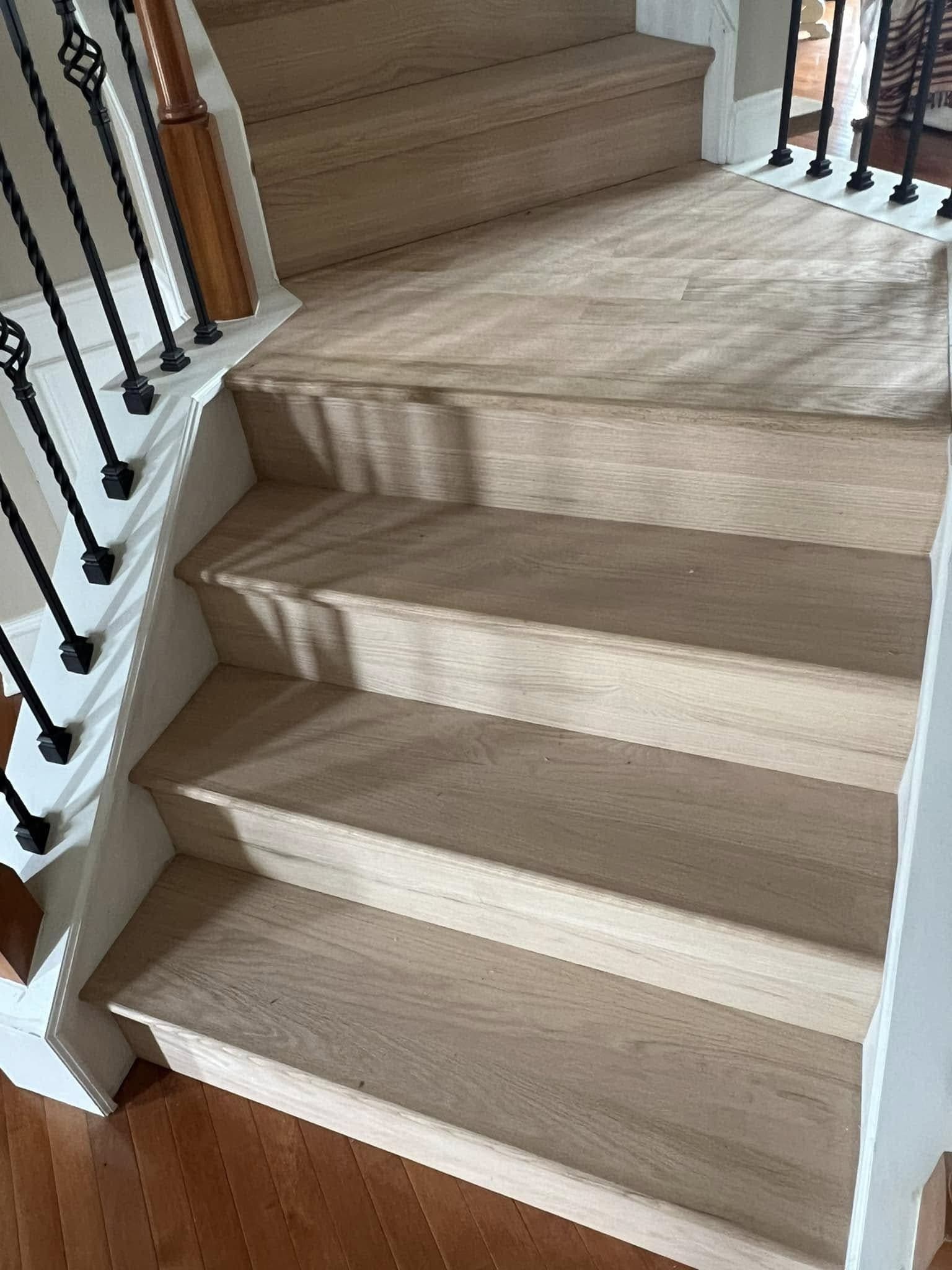
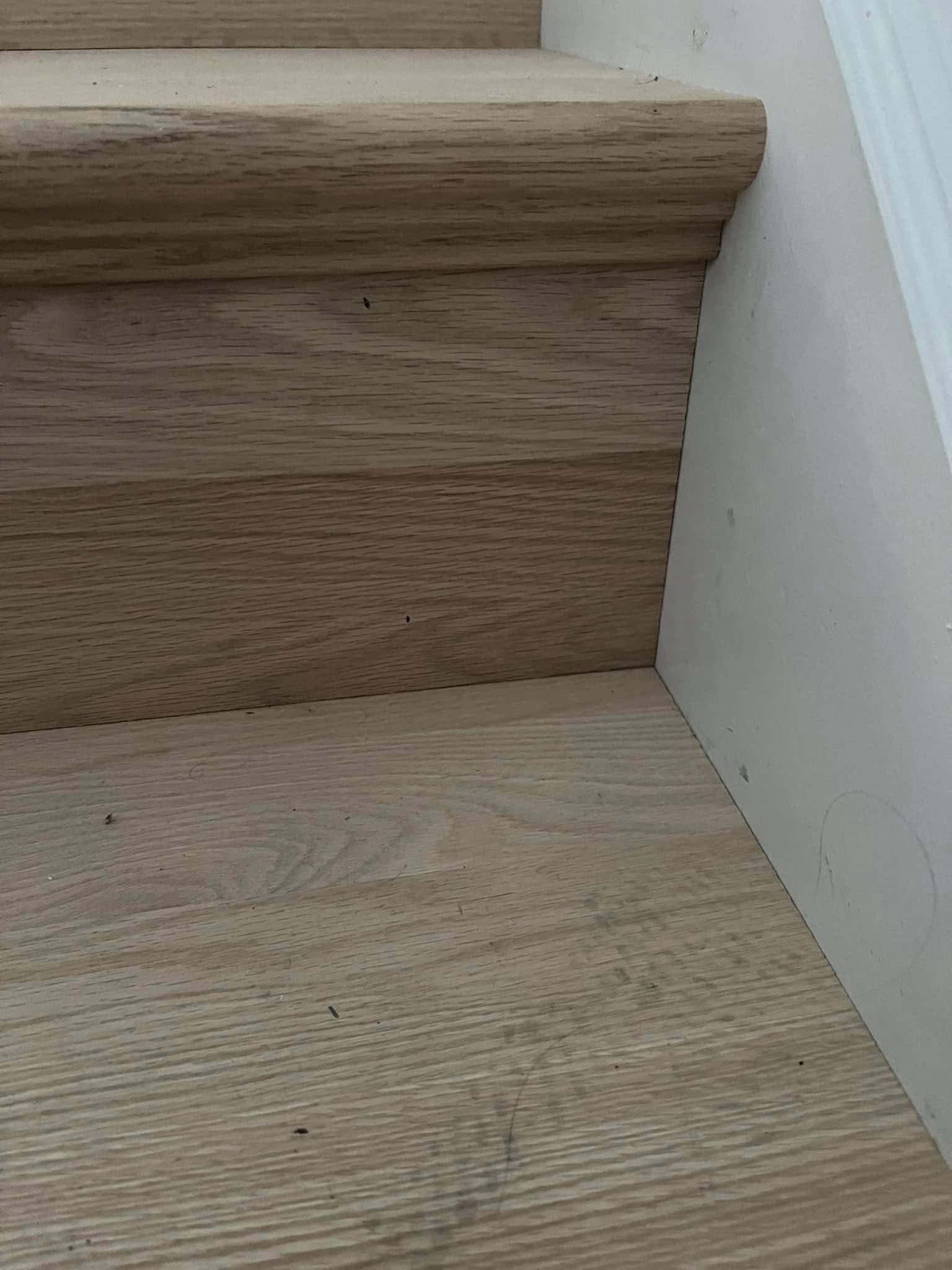
Treads, risers, skirt, newels and balusters, bought as a system so the parts actually fit each other. White oak treads with painted risers is the most requested combination and one of the more demanding to fit well.
Exterior trim
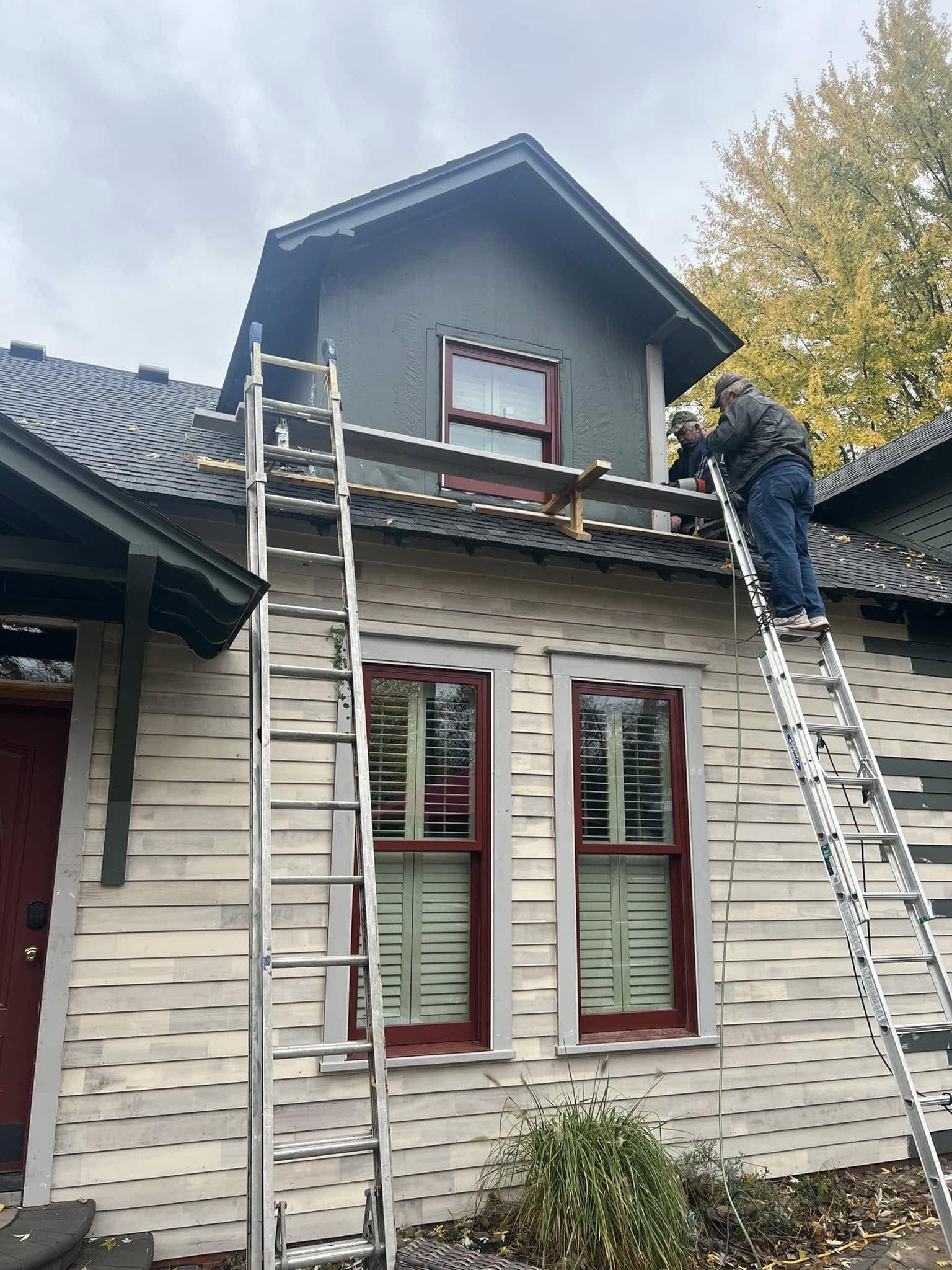
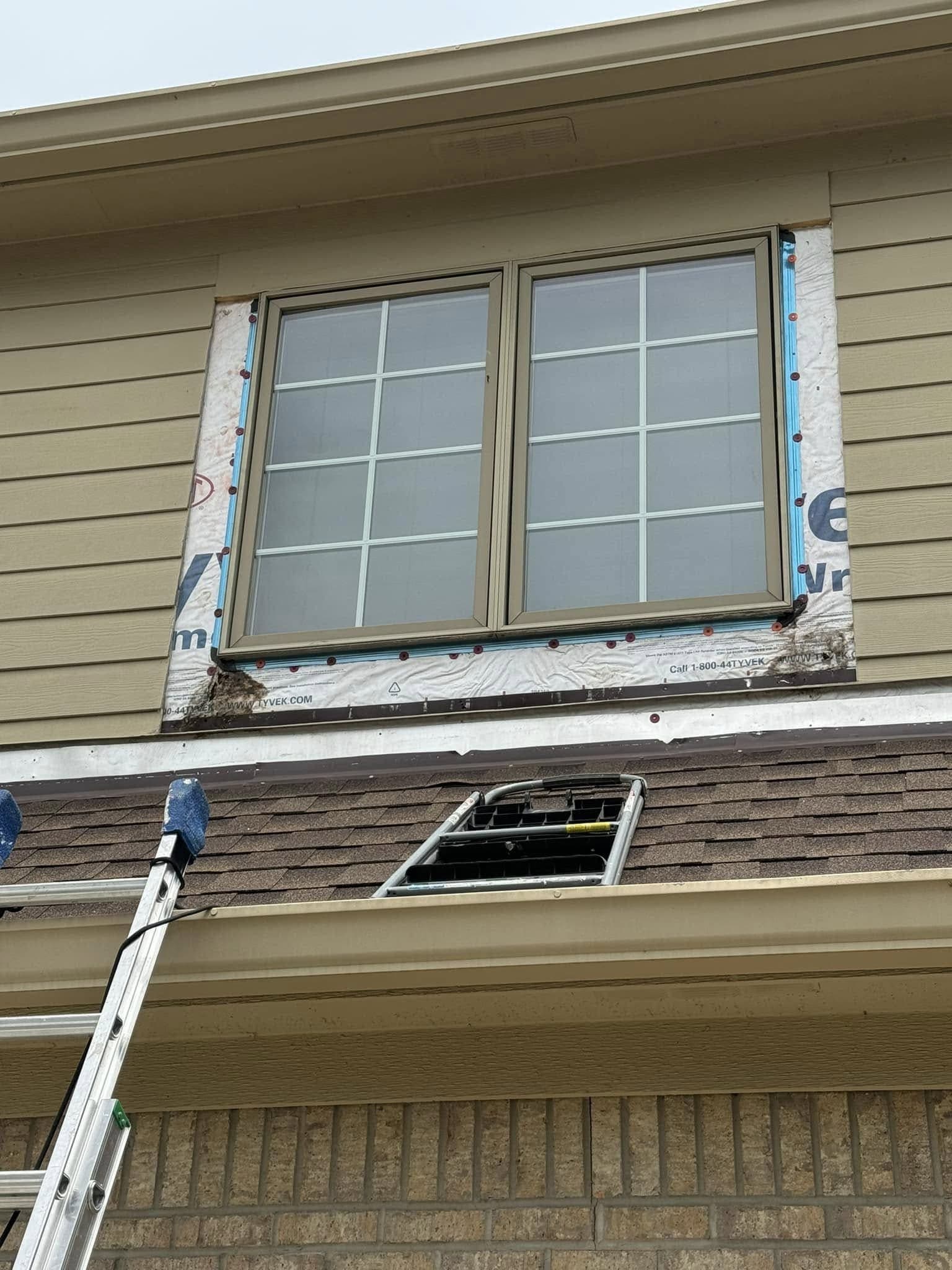
Different rules entirely: it has to shed water, move with the weather and hold paint outdoors. Cellular PVC and fibre cement do that better than wood does, and both are what we reach for on a replacement rather than putting back what rotted.
Everything trim & carpentry covers
- Baseboard, casing and door trim
- A room, a floor or a whole house. Coped inside corners, scribed to the walls you actually have, and fastened into framing rather than into drywall.
- Stairs, treads and balustrades
- Re-treading an existing carpeted staircase in hardwood, new risers and skirt, and iron or timber balustrades. Priced per tread because that is how the work divides.
- Crown and ceiling detail
- Crown moulding, coffers and beams. Ceilings are rarely flat, so long runs get scribed and sprung to the plane the ceiling actually sits in.
- Built-ins and shelving
- Bookcases, window seats, mudroom benches and cabinetry either side of a fireplace, built to fit the opening rather than to fit a catalogue size.
- Feature walls and panelling
- Shiplap, board and batten, and panelled walls. Layout is the whole job — the batten spacing has to resolve sensibly at both ends of the wall, which means setting it out before the first piece goes up.
- Exterior trim and window openings
- Replacing rotted fascia, soffit, corner boards and window trim, in materials chosen to survive outdoors rather than to match what failed.
The five things that turn a trim and carpentry job into a repair
Mitring inside corners
A mitred inside corner depends on the framing never moving. Across one Central Indiana heating season it moves, and the joint opens into a line you cannot unsee. A coped joint has one piece cut to the profile of the other and closes as the wall shrinks.
Cutting to a number instead of scribing
No wall is straight and no opening is square. Trim cut to a measurement fits the drawing; trim scribed to the wall fits the house. In an older place that has settled, the difference is every joint on the floor.
Caulking to hide a bad cut
Caulk belongs where two materials move against each other. Used to fill a gap in a mitre, it shrinks, cracks along the line, and puts the gap back with a shadow around it. The joint has to be right first.
Nailing without finding the framing
Trim pinned only to drywall comes loose, and the nail holes telegraph through paint as the panel flexes. Base and casing get fastened into studs and blocking, which means knowing where they are before the nailer comes out.
Installing stain-grade with paint-grade habits
Filler, caulk and a slightly open joint all disappear under paint and none of them disappear under stain. Stain-grade work has to be right at the saw, and pricing it as though it is the same job is how it ends up neither.
What a trim and carpentry job actually looks like on site
Match and order
Existing profiles identified and a sample brought to you — stock, built-up or custom-milled. Material is ordered with the waste a mitred run genuinely needs rather than the square footage, and stain-grade stock is over-ordered so boards can be selected.
Read the rooms
Walls checked for straightness, openings for square, floors for level. This is where we find out how much of the job is scribing, and it happens before anything is cut.
Fit
Casing, then base, then any built-up or ceiling work. Inside corners coped, outside corners mitred and glued, long walls scarfed over a stud rather than butted in mid-air.
Treads and balustrade
The most exacting work in the house and the most visible. Each tread and riser cut and fitted individually, skirt scribed to the stringer, and the balustrade set last so the heights are right against the finished treads.
Fill, sand, prime
Nail holes filled, sanded flush and spot-primed, and caulk only at joints that genuinely move. Then a walkthrough with the punch list written down and cleared before we invoice.
Paint grade or stain grade
The single decision that changes the most about a carpentry quote, before anyone has picked a profile.
| Paint grade | Stain grade | |
|---|---|---|
| Material | Poplar, MDF, finger-jointed stock | Selected solid hardwood |
| Material cost | Lower | Higher, and over-ordered to select |
| Joints | Filled and caulked | Must close on their own |
| Grain matching | Not required | Board by board through a room |
| Repairs later | Fill and repaint invisibly | Difficult to hide |
| Where it wins | Crisp, bright, architectural | Warmth and visible material |
Four things move a carpentry quote
Matching what is there
Running new trim through a whole house is straightforward. Matching a profile that has not been milled in forty years, so old and new meet invisibly, is the expensive version.
How square the house is
Every house is out of square somewhere. Trim is where it shows. An older house that has moved needs every piece scribed rather than cut to a number.
Stairs
Treads, risers, skirt and balustrade are the most exacting carpentry in a house, and the most visible. They are priced per tread for a reason.
Paint grade or stain grade
Paint grade forgives a filled joint. Stain grade forgives nothing — the grain has to match, the joints have to close on their own, and the material cost is higher before anyone starts.
We walk the rooms, note every profile and every opening, and send a written estimate with materials and labor itemized. Where matching existing trim is not realistic, we say so before you are committed to it.
What homeowners ask about trim & carpentry
Can you match the trim in our older house?
Usually, and how we do it depends on the profile. Some are still made and can be bought. Some can be built up from two or three stock pieces so the shadow line matches even though no single piece does. Some have to be run as a custom knife, which is worth it for a whole floor and rarely worth it for one doorway. We bring you a sample before we order.
Why cope an inside corner instead of mitring it?
Because houses move and mitres open. A mitred inside corner relies on two pieces staying at exactly the angle they were cut at; when the framing shrinks across a heating season, the joint shows a line. A coped joint has one piece cut to the profile of the other, so it slides rather than gaps. It takes longer per corner and it is the difference between trim that looks right for one year and trim that looks right for twenty.
Do you paint the trim as well?
We fill, sand and spot-prime as part of the carpentry, because that work belongs to whoever cut the joints. Full painting is a separate line on the estimate rather than something assumed either way, so you can see what it costs and decide.
Can you re-tread a carpeted staircase in hardwood?
Yes, and it is one of the highest-value things you can do to a builder-grade house. The carpet comes off, the existing treads are either overlaid with retro-fit treads or replaced outright depending on what is under there, risers go on painted, and the skirt is scribed to the stringer. What decides the price is the number of treads, whether there are winders, and whether the balustrade is being changed at the same time.
Our trim does not match room to room. Can it be unified?
Usually, and there are two honest routes. Replace everything to one profile, which is clean and costs what it costs. Or match the best of the existing profiles across the rooms that are being changed, which is cheaper and only works if that profile can be bought or built up. We bring samples of both before you decide.
Why is a wide baseboard more than twice the price of a narrow one?
Material, partly — but mostly because a wide profile magnifies everything. A wall that bows by an eighth of an inch is invisible behind a three-inch base and obvious behind a seven-inch one, so wide trim gets scribed where narrow trim gets cut. Wide painted profiles also want MDF or engineered stock to stay flat, which changes the material order.
Do you do the painting?
We fill, sand and spot-prime, because that work belongs to whoever cut the joints and it is how you find a joint that needs another pass. Full finish painting is a separate line on the estimate so you can see it and decide, rather than something we quietly assume either way.
Four steps, from the first call to the last walkthrough
Call or send the form
Tell us the room and roughly what you want done. We answer our own phone.
Walkthrough & estimate
We measure on site and send a detailed, transparent estimate — materials and labor itemized.
Build
Our own crew, code-compliant work, the site swept at the end of every day.
Final walkthrough
We go through the finished room with you and clear the punch list before we invoice.
What you are actually choosing between
The person who quotes it runs it
The same crew that walked your house builds the job. You are not handed to a project manager who was not there.
Seven trades in-house
Tile, carpentry, flooring, trim, fireplaces, decks and finish work. One point of contact instead of a general contractor and five subs.
An itemized written estimate
Materials and labor, line by line, before anyone picks up a tool. You know the price at step two of four.
We answer our own phone
Call 317-427-8162 and you get the company, not a call centre. Working across Central Indiana since 2012.