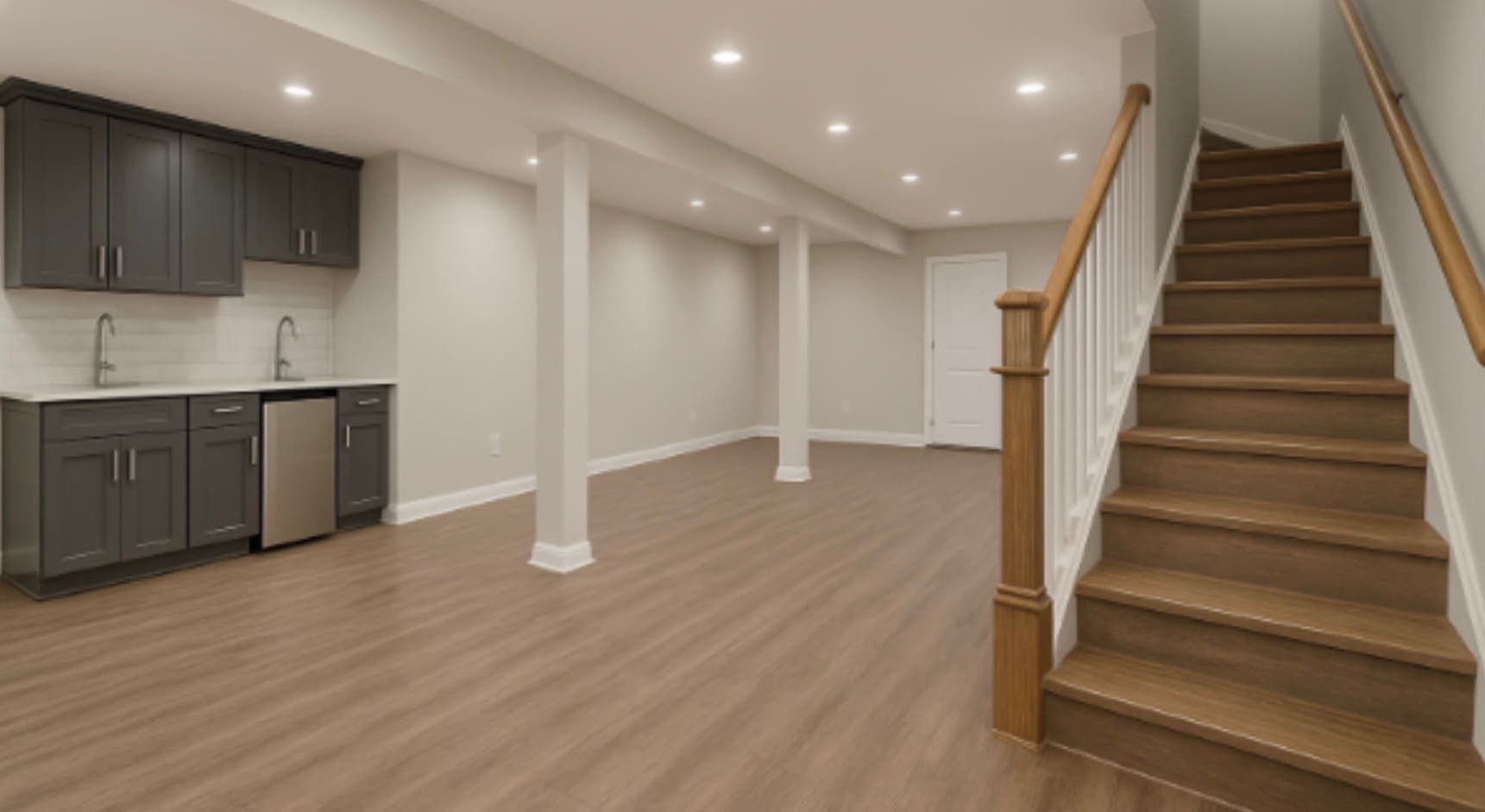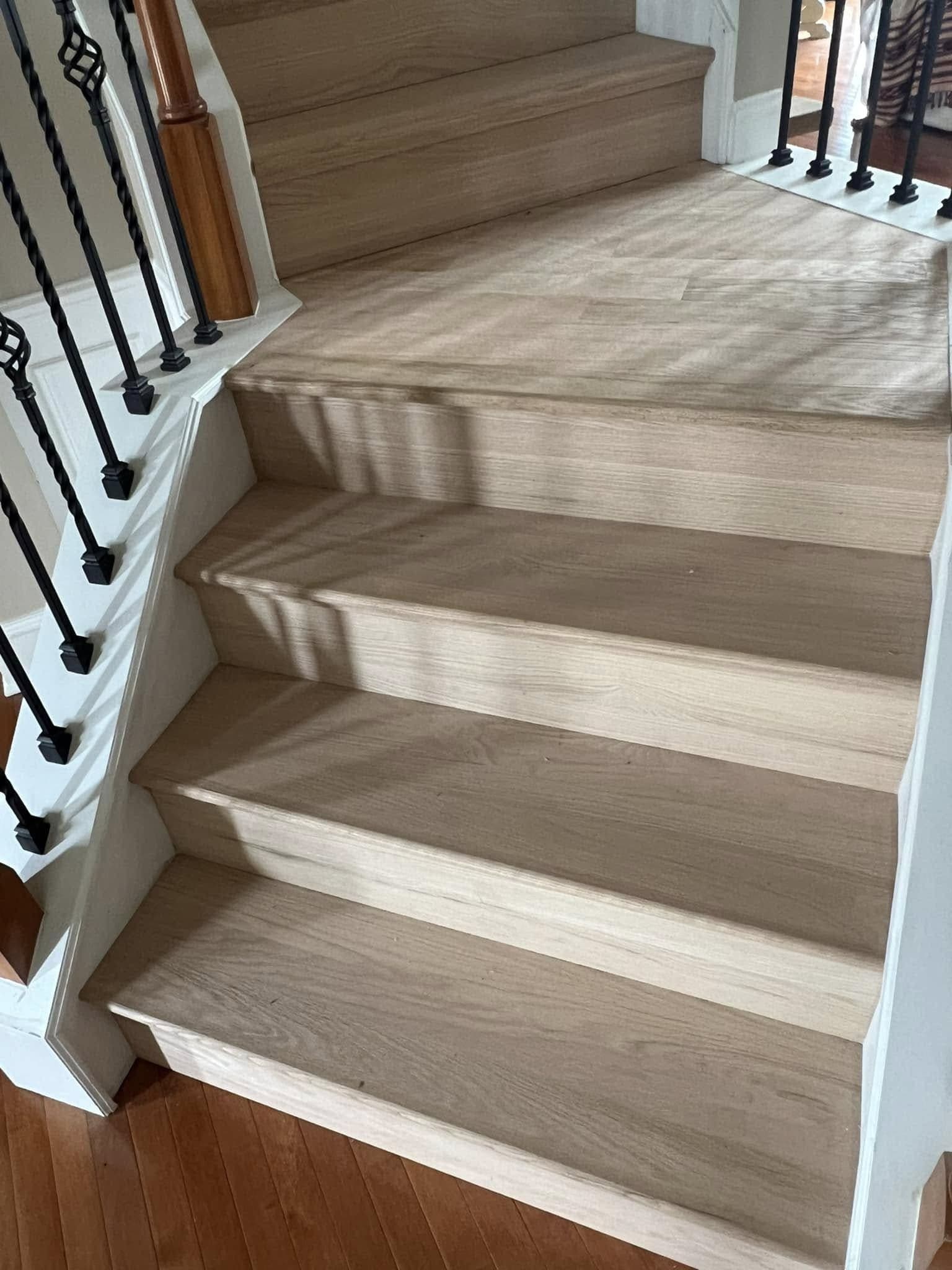
The wall was fine at the walkthrough. Flat, white, unremarkable. Then the electrician hung the sconce, or the October sun dropped to the west end of the hallway, and long soft shadows appeared across it — a wide vertical band, a faint horizontal ridge, a line of round dimples marching up one stud. Nothing about the wall changed that afternoon. The light changed.
Drywall does not go wavy at dusk. It was always slightly out of plane, the way every drywall wall is, and until that light arrived nothing in the room was capable of reporting it.
What raking light is doing
Light that arrives at a wall straight on lands the same on a high spot and a low one, and the surface reads as a single tone. Light that arrives almost parallel to the wall — grazing it — has to climb over anything standing proud of the plane, and leaves a shadow behind. A ridge too gentle for your hand to find throws a shadow you can see across the room. The eye judges flatness poorly and finds shadows very well. You are not looking at the seam. You are looking at the shadow it casts.
Grazing light is not exotic. It is most of the light in a finished house:
- A window at one end of a hallway, lighting the length of the side walls instead of the face of them.
- Recessed cans set close to a wall, skimming the surface rather than washing it.
- An under-cabinet strip: a bright source inches off the wall, aimed down it.
- A stairwell lit from above, taking the walls at a steep angle for their whole height.
- Winter sun, which sits lower and reaches further in than the summer sun that was there when you picked the paint.
A wall that gets one of those will be judged in raking light for the rest of its life, whatever it looks like at noon.
Flatness is one problem. Sheen is a different one
Two faults look identical from across the room and need completely different work. Separate them before anybody opens a bucket of compound.
Run your hand across it
Close your eyes and drag your fingertips slowly over the mark, across it rather than along it. If you feel a hill, a hollow or a lip, the wall is out of plane — compound built above the surrounding surface, a hollow where it shrank back as it dried, or a stud crowned enough to push the board out along its length.
Shape has a vocabulary. A mark running horizontally where two board edges met is a joint. A line running floor to ceiling every stud bay is framing, not taping. A hard line down an outside corner is bead that was not feathered far enough back. Round dimples in a group are fasteners, and they are their own problem with their own fix.
When your fingers find nothing
If the surface is genuinely flat and the mark is still there, you are looking at sheen, not shape. Joint compound and the paper face of drywall drink paint at different rates. Compound is thirsty. Paper is less so. Same color, same can, two different amounts soaked in, two different amounts bounced back at you. The trade calls it flashing, and it prints an accurate map of every taped area in the room — wide bands over the butt joints, narrow ribbons at the tapered seams, a halo around every screw.
More topcoat will not fix that. The coat underneath does. A drywall primer-sealer exists to leave paper and compound with the same thirst before any finish paint goes on. Rolling color straight onto bare board and bare compound is how a flat wall ends up looking like a seam diagram, and it is quietly why a touch-up after a repair almost never disappears.
Why butt joints telegraph and tapered seams do not
A sheet of drywall arrives with a shallow factory recess down each long edge. Put two of those together and you have a valley set below the plane of the board; tape and compound fill it and finish level with the face. That is why the long seams in a well-hung room can be near impossible to find.
The short ends have no recess — they are a square cut through the sheet. Where two of them meet, the tape has no valley to sit in, so it sits on top of the finished plane and every coat builds from there. Nobody can make that flush. All anyone can do is spread it, feathering wide enough either side that the slope is too gentle for a shadow to catch. A good butt joint is not flat. It is a very long, very shallow hill your eye cannot find the edge of, and raking light raises that bar.
Two things help, both before finishing starts. The first is where the joints land: any wall longer than a sheet has butt joints somewhere, but which wall and where on it is a choice. The middle of the wall your hallway window rakes is a bad place for one. Behind the sofa it is nothing. The second is backing them over a device that pulls the board ends slightly off the framing, manufacturing the valley the factory did not provide — worth asking for on a long wall in hard light.
Ceilings are the hard version: ceiling light is nearly always raking light, and a ceiling carries more butt joints than a wall.
The finish is a specification, not an attitude
How smooth a wall gets is not a measure of how much the crew cared. It is a level of finish, and the trade has standardized it into a ladder. Each rung adds a step, and each step adds labor:
- Board hung, joints untreated — for surfaces that get covered or never seen.
- Tape embedded in one coat and left there — above a dropped ceiling, in a garage.
- A coat over tape and fasteners — a substrate for tile or panel, not something anybody paints.
- Another coat, this one smoothed so no tool marks or ridges are left — appropriate under a heavy texture.
- Coats over every joint, bead and fastener, feathered wide and sanded smooth — the standard for a painted wall, and what a quote means when it says nothing at all.
- All of that, plus a thin skim of compound across the whole surface, sanded, so paper and compound present the primer with one continuous material.
The trade numbers those rungs, and the number is what lands on a spec sheet. What matters is which description is in your quote, for which rooms, and whether the person who wrote it and the person holding the trowel would give the same answer.
The top rung is the one people do not know they are allowed to buy. A full skim evens out what is left of the topography and removes the porosity difference that causes flashing. It is the real answer to raking light, and it is not free — another pass of material, another sanding, more dust to clean up.
Which rooms actually need it
It depends, and here is what it depends on. Buy the top of the ladder for the long uninterrupted plane in a hallway or stairwell, for any wall a window rakes down its length, for a hard ceiling with cans in it, and for anything getting satin, semi-gloss or a deep saturated color. Flat paint scatters light and hides a great deal; every step toward gloss returns more of it as a reflection off whatever shape is there. So the paint decision and the finish-level decision are one decision made twice, months apart, usually by different people.
Save the money where the room breaks the light up on its own. A wall mostly covered by cabinets, tile, a headboard or bookshelves is one nobody will read a shadow across, and so is one wainscoted or battened up most of its height. A basement family room under a drop ceiling is a different proposition from the same room with a hard ceiling and cans — part of why the basement ceiling decision gets made early.
Then the part nobody enjoys hearing: a skim coat is not a repair for bad hanging. Sheets fastened over crowned studs, a butt joint landed on the corner of a door opening, board forced over a bow — the wall has a shape, and skimming follows a shape rather than removing it. You would be buying a smooth wavy wall. The honest move is to pull the sheet, fix what is behind it and hang it again.
Lighting and drywall are the same conversation
They get quoted by different trades and they are one subject. A downlight close to a wall grazes it. The same fitting pulled further out washes it, and a washed wall forgives what a grazed wall reports. That distance costs nothing while the ceiling is open and cannot be changed afterwards — one of the arguments running through kitchen lighting in layers.
Under-cabinet light is the sharpest example in the house: a bright source inches from a vertical surface, pointed down it. On tile it reads as craftsmanship. On painted drywall it reads as an X-ray, worth knowing when you decide where the tile stops and plain wall begins in a kitchen project.
If the wall already shows
Wait for dark. Hold a work light or a phone flat against the surface with the beam running along the wall, and walk it slowly across the whole plane. That is the light the tapers should have used, and it shows everything there is. Mark what you find with a pencil tick, not tape, which lifts fresh paint.
Then repair by plane, not by patch. Whatever gets skimmed gets skimmed corner to corner, and whatever gets primed and painted goes corner to corner too. A repair that stops in the middle of a wall has an edge, and an edge in raking light is the thing you were trying to get rid of.
Timing matters too. Marks that turned up in the first heating season after framing are partly lumber giving up moisture — why wood moves here — so let the season finish and fix it once, rather than chasing it again next January.
Where this sits in the money
We do not publish our own prices, for the reason we give everywhere else on this site: a number written before anyone has seen your house is a guess. What we can point at is independent research. It puts basement finishing in the Indianapolis area at roughly $25 to $65 per square foot, which puts a 1,000-square-foot basement somewhere between about $25,000 and $65,000 — and a basement is the largest continuous run of new drywall most homeowners ever buy in one go.
The level of finish lives inside a spread like that, not beside it. It is labor, invisible on a line that just says drywall, and it is why two quotes for the same finished basement can both be honest and sit far apart — one intends to skim the long wall under the stair light, the other intends to tape it, sand it and go home. Neither says which unless somebody asks, which is the shape of why the cheapest quote is usually the incomplete one. The cheap time to ask is in open framing, at the pre-drywall walkthrough, while everything is still moveable.
What to remember
The seams were always there. The light is new, and light close to a surface turns a ridge you cannot feel into a shadow you cannot stop seeing.
Feel the mark before you diagnose it. If your fingers find it, it is shape, and it belongs to the taping. If they do not, it is porosity, and it belongs to the primer. Ask which level of finish is in the quote, room by room, and buy the skim where the light grazes and the paint carries sheen. Repair whole planes, never patches.
If a wall of yours is doing this, or a room is about to be closed up and you would rather get it right the first time, ask for an estimate and we will come and look — late in the day, with the light low.