The spread between the low quote and the high one is rarely a discount. It is two people describing two different jobs. Each walked your house, made assumptions about the parts they could not see, and priced their own assumptions. Neither wrote the assumptions down. That is what you are holding when you put the front pages side by side.
A total is a sum. What matters is what got summed.
Nobody agreed on the job before anyone priced it
When you ask for quotes on the same bathroom, you supply the room. Each contractor supplies the scope. That is the whole problem in one sentence.
Standing in the same room, three estimators make a run of independent calls. Does the subfloor get leveled or tiled over. Does the shower valve get replaced or reused. Does the exhaust fan get ducted to the outside, or reconnected to whatever duct is already up there. Does the floor get a transition at the door, and who paints the hallway side of the casing. Every one of those is defensible on its own. Stacked, they are thousands of dollars apart, and the front page of a quote shows none of them.
So the cheapest quote is usually not the cheapest price for your job. It is the price of the narrowest reading of your job. Compare the readings and the totals start to mean something. Not before.
The honest reasons a number comes in low
Some low bids are simply low. Treating every cheap quote as a trap costs people money too.
- Overhead. A small crew that does the work itself carries less cost than a company managing subcontractors and marking up their invoices.
- Trade coverage. Work kept in-house does not pick up a second margin on its way to you.
- Scope you actually chose. Leaving the plumbing where it is is the single biggest saving available in a bathroom. Repainting cabinets, refacing them and replacing them are three very different numbers for the same kitchen, and which of the three you are looking at moves a total further than anything else in the room.
- Specification. A plainer tile, a stock vanity, a laminate top. Cheaper because you decided it should be.
All of that produces a smaller number attached to the same list of work. That is the test. Cheaper for the same scope is a bargain. Cheaper for a shorter list is a different job with the same room name on it.
What usually got left out
The parts nobody looked at
A quote written from the doorway prices a room that resembles yours. Estimating what is behind a wall without opening it is guessing, and the optimistic guess is the one that wins the bid.
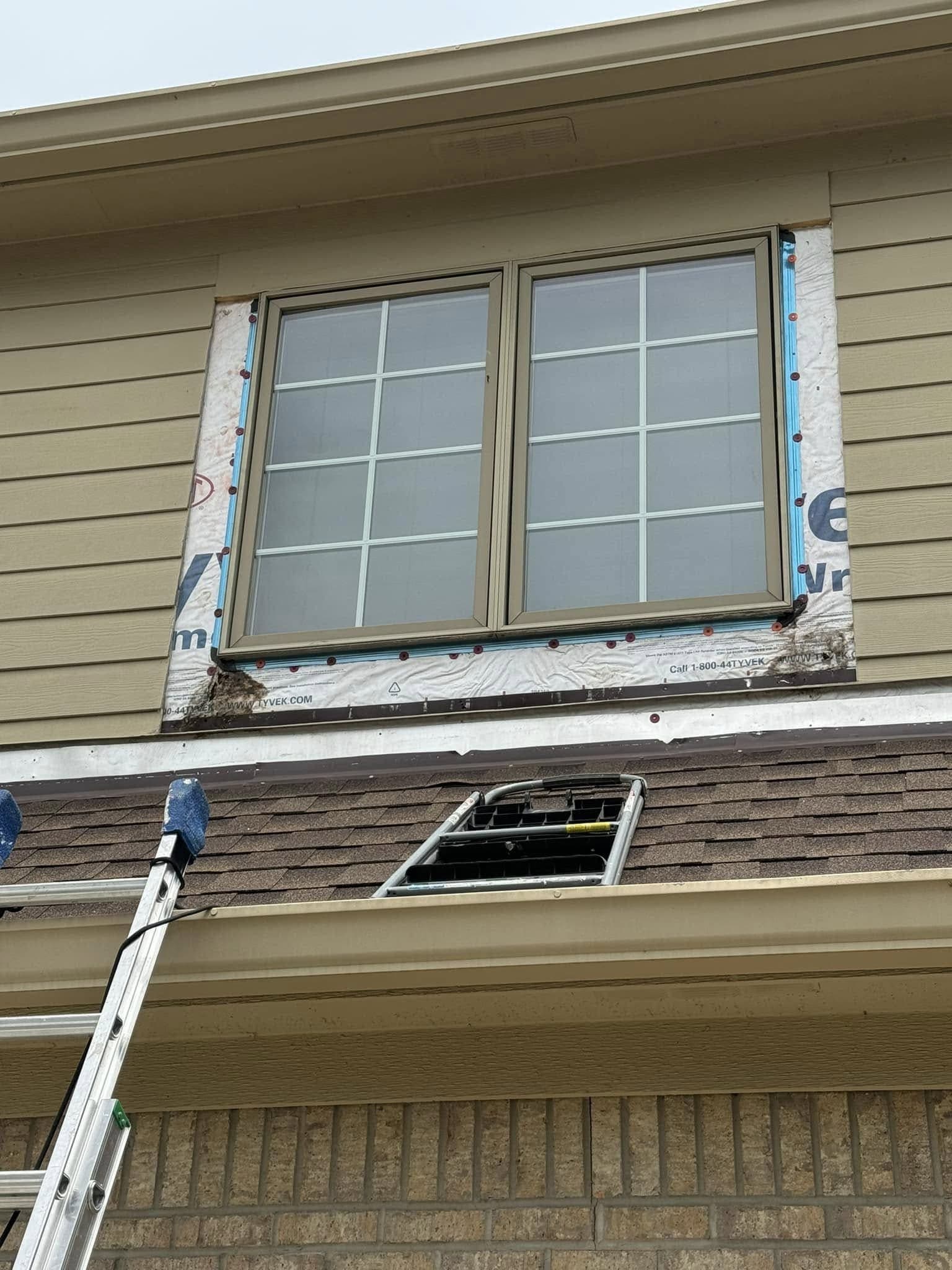
Floors are the clearest case. Tile needs flat, and old floors are not flat. Leveling the subfloor is its own scope with its own material and its own labor, and it is invisible in every finished photograph. Behind the walls of an older Hamilton County house there is usually something else again — a vent that goes nowhere, a notched joist, a bottom plate that has been damp for years. Someone has to price it. If nobody did, it arrives later, at the moment you have one contractor on site and no alternatives.
The layers you cannot photograph
Waterproofing is the first thing cut when a number has to come down, because a shower done properly and one done badly look identical for years. What goes behind the tile is the assembly the room lives or dies on, and it almost never appears as its own line with its own price.
Ask which system, by name, and whether every part of it comes from the same manufacturer — substrate, corners, pipe penetrations, pan. A quote that answers immediately has priced an assembly. One that answers "waterproofed to code" has priced a phrase. The same test works on the fan: a fan on the list with no duct on the list means the existing duct gets reused, wherever it terminates, and sizing and ducting it costs little at rough-in and a great deal once the ceiling is closed.
The permit, and the inspection attached to it
A bid can be cheaper by the permit fee, which is small, and by the review time, which is not. In Fishers, applications run through the city's online portal, and the City of Fishers Permitting and Inspections office puts review of a complete residential submittal at typically no more than 15 working days. Once issued, work must commence within 12 months and be complete within 24. Their number is 317-595-3120. Carmel, Noblesville and Westfield each run their own process through their own authority, which is why the answer changes with the city line.
The fee is not the point. The inspection is. It puts an independent person in front of the rough-in before it goes behind drywall, and a quote that skips it has removed the only outside check in the job.
Egress, in any basement bedroom
If a basement quote calls a room a bedroom, that room needs an emergency escape and rescue opening. Indiana Residential Code R310 asks for a net clear opening of 5.7 square feet, at least 20 inches wide and 24 inches high, with the sill no more than 44 inches above the finished floor — confirm the detail with the local building department. Net clear opening means the actual hole when the window is fully open, not the frame and not the glass. Cutting a foundation wall, setting a window and building a well is real money, and a thin basement quote is the one missing it — check what you were handed against the numbers Indiana asks for.
The arithmetic that turns a low bid around
Rework costs more than work. That is the first mechanism.
Pulling new tile off a floor to correct the substrate underneath charges you twice — once for the material you are destroying, once for the labor to destroy it. A second mobilization costs more than doing the work while the crew was already standing there. Templating a countertop a second time because the cabinets moved costs a slab. All of it is cheaper to avoid at the estimate than to correct at the finish.
The second is leverage. On the day you sign, the market for your job closes. Everything added after that is priced by one contractor with no competition, which is precisely what a change order is and why a thin scope turns into the expensive one. Money held outside the quoted total is what keeps that a decision rather than an argument, and sizing it properly is worth doing before you choose, not after.
There is a third effect nobody puts in writing. A job priced below what it costs to build has to find the difference somewhere — the schedule, the material, or the punch list. Usually the punch list, because it is last.
Making three quotes describe one job
You cannot compare documents written to different briefs. You can rewrite the brief.
- Take the most detailed of the three and strip it to a plain list of scopes in build order — protection, demolition and disposal, rough trades, framing, inspection, substrate and waterproofing, drywall, finishes, trim and paint, fixture set, final clean, punch list.
- Add anything none of them mentioned that the room obviously needs.
- Send that same list back to all three and ask each to price what they left off, as an addition, in writing.
- Compare what comes back, line against line, never total against total.
Reading one document well is its own skill — an itemized estimate rewards being read back to front, exclusions first. This exercise is the other half. It forces three documents to answer the same question.
Two things fall out. The gaps, which are the point, and how each contractor responds, which is most of the interview. An estimator who prices the missing lines on the spot has built your job in their head. One who goes quiet priced a room that looked like yours.
Where a published cost band actually helps
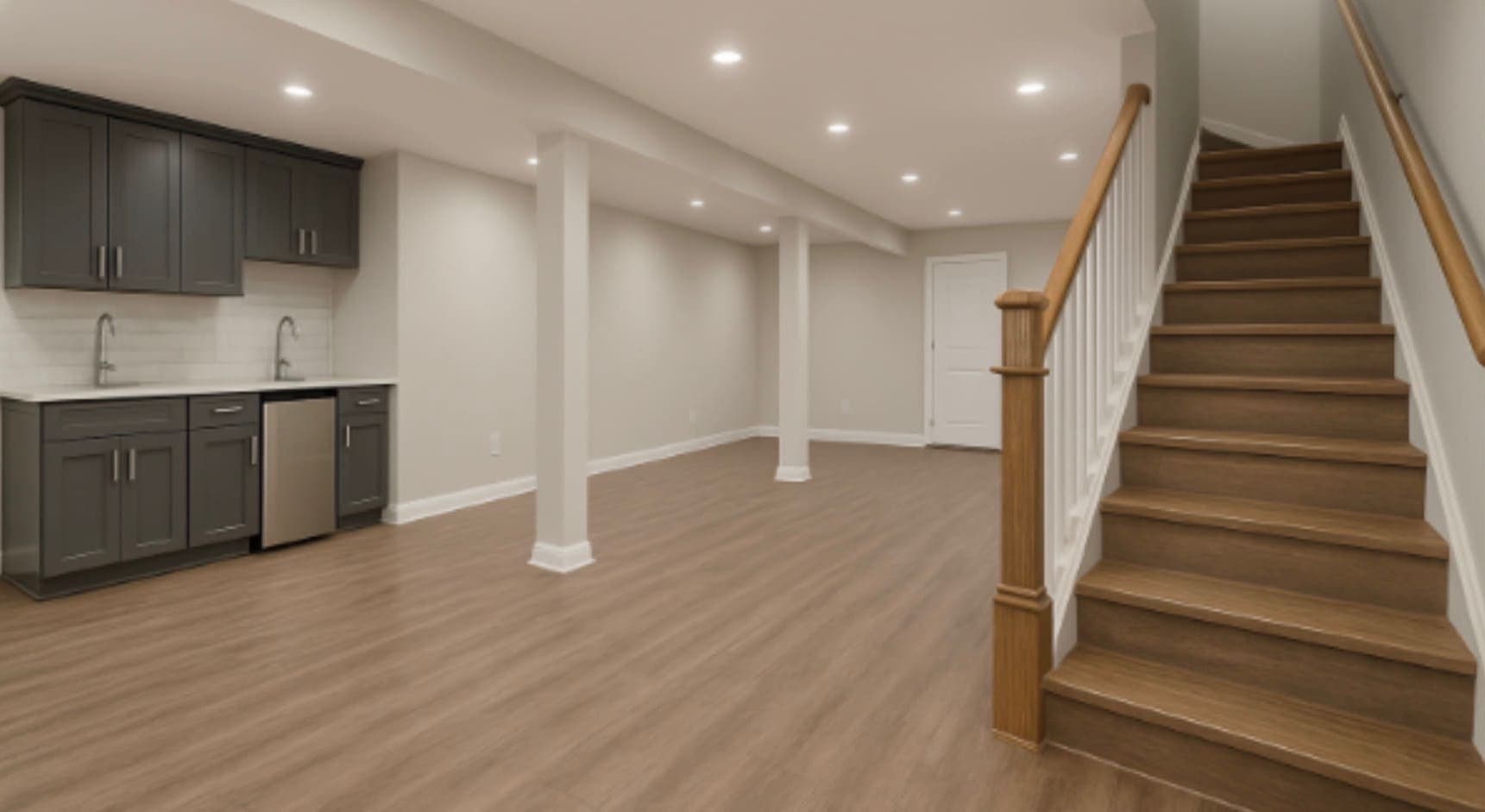
We do not publish prices of our own, for the reason we give everywhere else: a number written before anyone has seen your house is a guess. What can be published is what independent research says people around Indianapolis spend. Published Indianapolis basement finishing research, including Angi, puts finishing at roughly $25 to $65 per square foot — for a 1,000 square foot basement, about $25,000 to $65,000. The same research splits that band by scope rather than by luck: a basic finish around $25,000 to $35,000, a mid-range finish including a bathroom around $35,000 to $50,000, and a premium finish with entertainment features from about $50,000.
Read the band the right way round. It is wide because scope is wide, not because some contractors are generous. A quote sitting under it has usually landed in the lower tier of that list, and the question is whether that tier is what you asked for. Sometimes it is. If the basement you described has a bedroom, a bathroom and a wet bar in it and the number matches a basic finish, the difference is not a deal. It is a gap nobody has priced yet.
What a cheap quote assumes about a house here
Water first. Nothing should be framed over a wall that leaks, and a basement quote that goes straight to studs has assumed the wall is dry without reading it. Hamilton County also carries an EPA Radon Zone of 1, the highest of three — a predicted average indoor screening level greater than 4 pCi/L, against an EPA action level of 4 pCi/L. Finishing a basement changes how air moves through it, so testing belongs in the plan whether or not any of the three quotes mentions it.
Kitchens have their own version. Two island quotes can be far apart because one of them narrowed the aisle to make the island fit. NKBA guidance is a clear working aisle of 42 inches for one cook and 48 inches where two people work or anyone passes behind someone working — measured with the doors open, because a dishwasher door, an oven door and a trash pull-out each take a bite out of it. A bigger island is easy to draw and cheap to price. Living with it is what has to be checked first.
None of what moves a number is a secret. Four things carry a bathroom, set out on the bathroom remodeling page; cabinets and stone carry most of a kitchen; a basement turns on water, ceiling height, egress and whether there is already a bathroom rough-in in the slab. If one quote is materially cheaper, the difference lives in one of those. Go and find it.
The short version
- A total is not a price until two totals describe the same work.
- Read for absence before you read for value. The line that is not there is the one that will cost you.
- Cheaper for the same scope is a bargain. Cheaper for a shorter scope is a different job.
- Get every gap priced in writing while you still have three contractors who want the work. Afterwards you have one, and no leverage.
We measure the room before writing a number, and the estimate itemizes materials and labor so you can see which decision is costing you money and change it before anything is ordered. If you want one to read against whatever else you are holding, ask for an estimate. If you would rather see finished work before you invite anyone in, it is on the projects page.