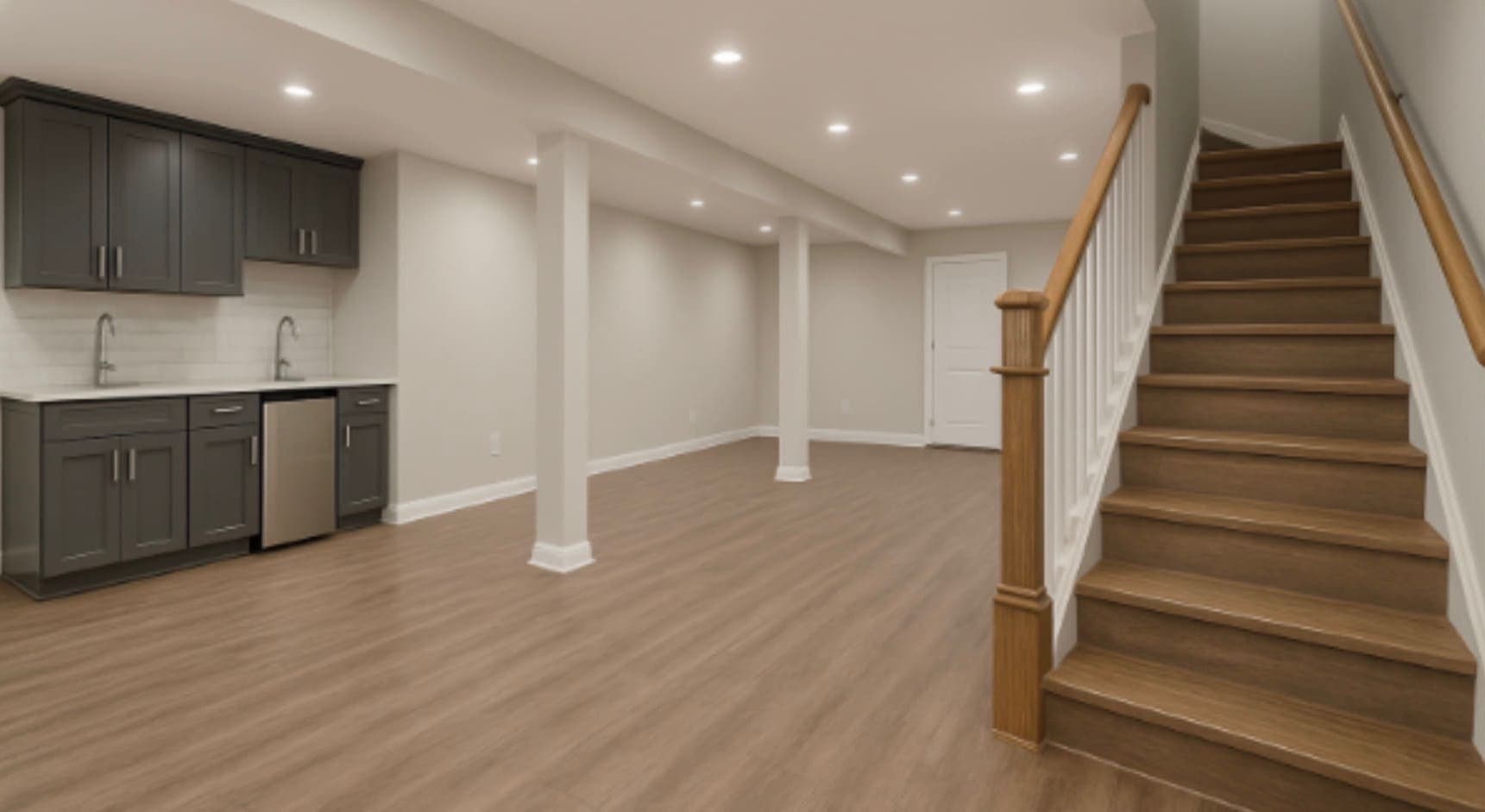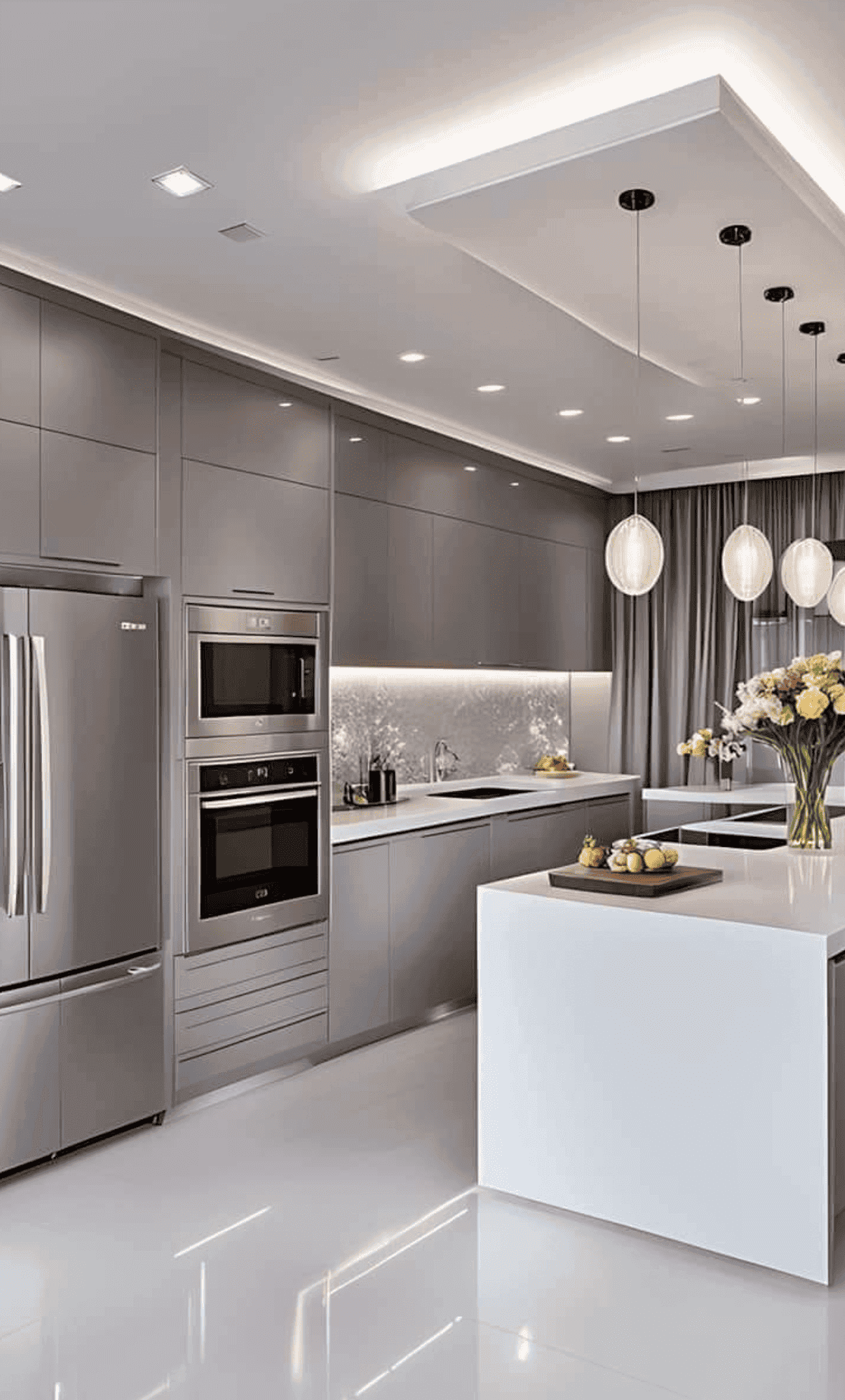
Open a door under the sink and look at the floor of that cabinet, back corner, where the disposal drain passes through. Then pull the drawer nearest the range all the way out and look at the bottom of the drawer box. Then look at a hinge screw. Those three places will tell you more about which cabinet option is actually available to you than an afternoon in a showroom will.
The choice between repainting, refacing and replacing gets sold as a style decision and priced as a budget decision. It is neither. It is a decision about the condition of the boxes already screwed to your walls. Two of the three options keep those boxes and finish over them. One throws them away. If the boxes are sound, all three doors are open and you are choosing on money and layout. If they are not, you have one real option, and the other two are ways of spending real money on a chassis that fails underneath the new finish.
What the three words actually mean
They get used loosely, including by people quoting you. Pin them down before you compare any numbers.
Repainting
Doors and drawer fronts come off and go somewhere they can be sprayed under controlled conditions. They are degreased, sanded or deglossed, primed with a bonding primer and sprayed. The face frames and the exposed cabinet ends get done in place, masked and sprayed on site. The boxes stay. The layout stays. The interiors usually stay whatever color they already are, because painted interiors take a beating from dishes and are the first surface to chip.
Painting changes the finish and nothing else. That reads as a limitation. It is also why it is the single biggest saving available in a kitchen that already works — you are buying the surface you look at and leaving everything behind it alone. What separates a good repaint from a bad one is entirely process, which is a subject of its own: what a factory finish actually takes is prep, environment and cure time, not the label on the can.
Refacing
New doors and new drawer fronts, plus a veneer bonded over the face frames and any exposed end panels. The veneer is either a real wood skin or a rigid thermofoil. The boxes stay bolted to the wall. Because the doors and the frames are most of what your eye actually reads as "the cabinets", a good refacing job looks like new cabinetry from a standing position.
Refacing is also the natural moment to change hardware. New hinges, usually soft-close. New drawer slides, sometimes new drawer boxes running inside the old carcasses. Those upgrades are available during a repaint too, but they get awkward to justify on their own.
What refacing does not change: the footprint, the interior depth, the shelf spacing a factory decided on decades ago, and the dead corner.
Replacing
Everything comes out to the bare wall. New boxes, new doors, new hardware — and the countertop comes off first, which is the part people underestimate. A stone top rarely survives removal intact, and even when it does, it was templated to the old boxes. Replacing is also the only one of the three that lets the layout change, which is why it is the only route to work zones that fit how you actually cook rather than how the original builder guessed.
The boxes decide
Here is the part that gets skipped. A cabinet box is a carcass of particleboard, plywood or, in older houses around here, site-built plywood with a solid face frame. The face frame is the structural part. It carries the hinge screws, it holds the boxes square to each other, and it is what a veneer bonds to during a refacing job.
If the face frame is solid wood and still tight, you have options. If it is a thin particleboard frame that has already swollen at the bottom, you have fewer. Veneer bonded over a failing frame is a new finish on a joint that is coming apart, and it comes apart on the same schedule it always was.
What we look at when we open the doors
- The sink base floor. A slow supply leak or years of a damp trap turns particleboard into something the texture of oatmeal. Press it. If it gives, it is not a paint job.
- Hinge screws. Back one out and put it in with a driver. If it spins without biting, the frame has lost its grip. One is a repair. Every door on the run is a pattern.
- Shelf edges and cabinet bottoms. Look at the raw edge where laminate stops. Swollen, wavy edges mean the core has taken on water.
- Reveals. Stand back and look at the gaps between adjacent doors. If they run wide at the top and tight at the bottom, a box has racked or the run has moved with the floor.
- Thermofoil. If the existing doors are foil-wrapped MDF and the foil is lifting at a corner near the range, painting over it is not a fix. Heat already beat that bond once.
- Drawer boxes and slides. Stapled butt-jointed boxes on epoxy-coated side slides are the honest tell of a builder-grade kitchen. They can be replaced inside boxes that are otherwise fine.
None of that is a verdict on its own. One soft sink base in an otherwise sound kitchen is a box to rebuild, not a reason to gut the room. What matters is whether the problems are isolated or general.
What paint cannot fix
Paint is a finish. It cannot move a wall, deepen a cabinet, add a drawer bank where there are only doors, or make the dead corner reachable. If your complaint is that you have nowhere to put a stand mixer and the pan cabinet is a cave, that is a storage problem and paint will leave it exactly where it is. You will end up with a good-looking kitchen that annoys you the same way it always did, and the annoyance outlasts the pleasure of the new color.
Paint also cannot fix a substrate that is already failing. Lifting thermofoil, delaminating veneer, a frame that will not hold a screw — those get worse under a new finish, not better. We will say so out loud during a walkthrough. It is usually the least popular thing we say and the most useful.
Where paint is the obvious answer: solid frames, sound boxes, a layout you have made peace with, and a finish that is simply dated or worn at the touch points. That kitchen is a very good candidate and the money goes further there than almost anywhere else in a house.
What refacing quietly does not do
Refacing sits between the other two in price for a reason: you are buying all new doors and drawer fronts, and the doors and fronts are the expensive part of a cabinet. That puts refacing in an awkward place. Once you are paying for a full set of new doors, new hinges and new slides, you are close enough to new boxes that you should ask for both numbers and compare them line by line — which is exactly the kind of comparison an itemized estimate makes possible and a lump-sum quote hides.
Refacing earns its keep in a specific case: good boxes, a layout that works, and a door style you genuinely dislike. Flat slab doors on a kitchen you want to read as shaker. That is a real problem and paint will not solve it, because paint keeps the profile it is sprayed onto.
When replacing is the honest answer
Some situations do not have three options in them.
- Water damage through more than one box, or any sign that a leak ran along the toe kick to the boxes either side.
- Particleboard frames that no longer hold hinge screws across the run.
- A layout you need to change. Moving the sink or the range is not a cabinet decision at all — it brings plumbing, electrical and drywall along with it, and once the walls are open the argument for keeping the old boxes gets thin.
- New appliance sizes. A counter-depth or panel-front refrigerator changes the opening, the surround and the panel that covers it, so panel-ready appliances frequently drag the cabinetry with them whether or not you wanted new boxes.
- Cabinets you cannot match. Adding a run to an existing kitchen sounds simple until you try to match a finish and a door profile that is out of production.
What the market spends on a kitchen
We do not publish our own numbers, for the reason we give everywhere: a price written before anyone has seen your kitchen is a guess. What we can point at is independent research on this market. Angi, Homeyou and Block Renovation research puts an Indianapolis kitchen project at roughly $18,000–$24,000, with the full spread running about $8,000–$40,000. One national dataset puts the average Indianapolis kitchen project at about $25,000, roughly 46% below the national average, against Angi's national range of about $14,600–$41,500.
Read those as the shape of the whole project, not as a cabinet line. Cabinets and stone are the bulk of any kitchen quote, and where the cabinet decision lands is the main reason two quotes for the same room look nothing alike.
Half measures that are not compromises
The three options are not mutually exclusive, and the best answer in an older Hamilton County house is often a mix.
Keep the perimeter, replace one run. Repaint everything and build one new cabinet where the sink base was wet. Repaint the boxes and buy new drawer boxes on undermount slides, which is the upgrade people notice daily. Reface the island only, because it is the piece that reads first.
There is a sequencing point too. If the countertop is staying, the cabinet work gets planned around it; a top that is coming off anyway changes what is possible underneath. Countertops carry their own hidden costs in seams, cutouts and edge profiles, so if the stone is being replaced in the same project, decide the cabinets first and let the top follow.
The Indiana variable
Painted wood doors move here. Humid summers and dry heating season pull moisture in and out of panel doors, and a raised panel that shrinks in January can show a thin unpainted witness line where the panel had been sitting when it was sprayed. That is not a failure of the paint, it is wood doing what wood does in this climate, and it is why doors get sprayed with the panel free to move rather than locked to the frame by the finish. Ask how a painter handles that.
What to do before you ask anyone for a number
Look at the boxes yourself, with a torch, on a Saturday morning. Press the sink base floor. Back out a hinge screw. Check the reveals. You will not diagnose the kitchen from that. You will know which conversation you are having, and you will hear straight away whether whoever quotes you looked at the same things.
Then get the options priced against each other rather than in isolation. The kitchen page lays out the two routes we work in — keep the layout and change the surfaces, or change the plan — and the cabinet decision is what separates them. Kitchens that went each way are in recent work, where the difference reads more clearly than any description of it. If you want us to open the doors and tell you which of the three your kitchen can actually support, ask for an estimate. We look first, then quote.