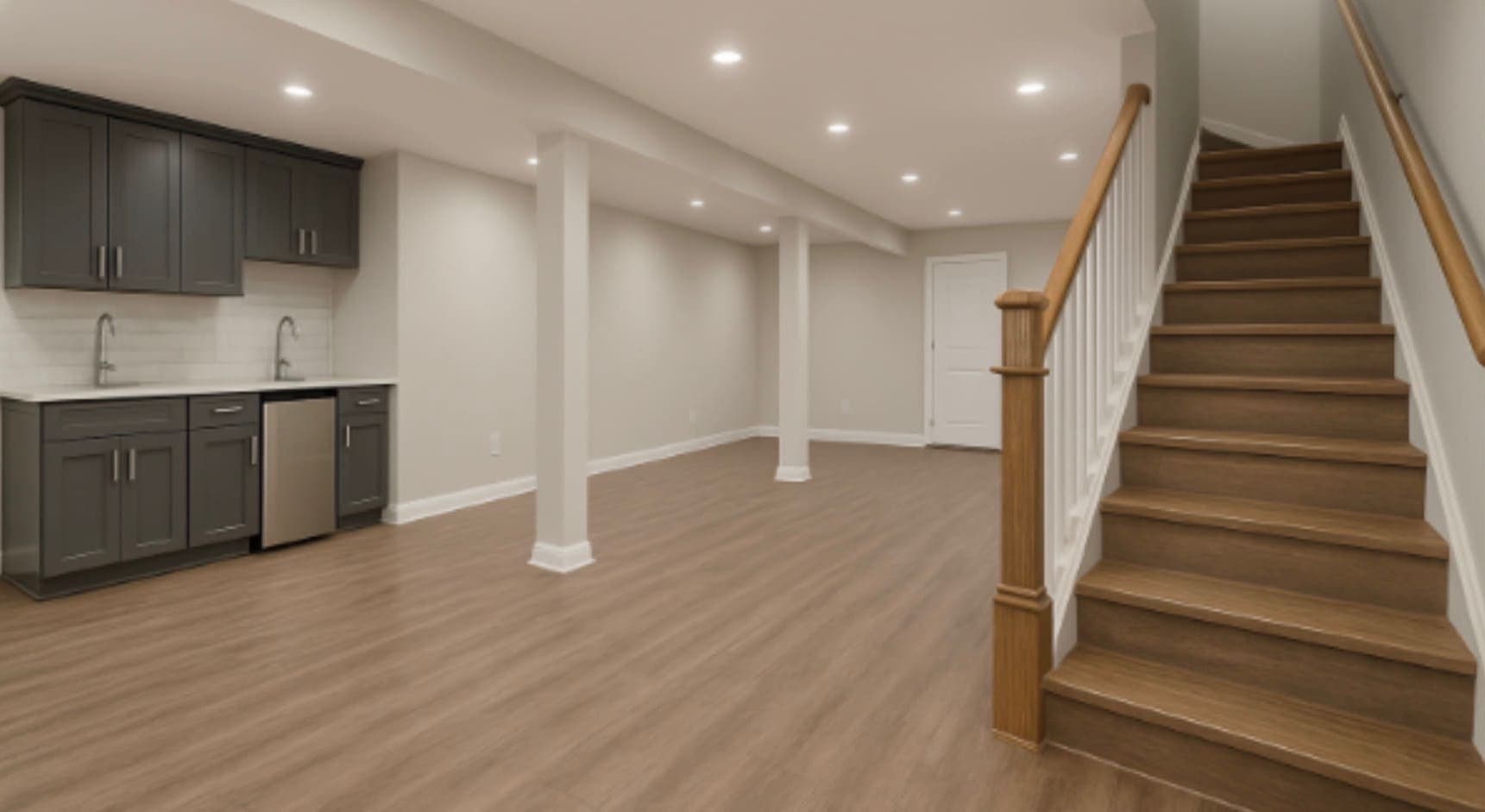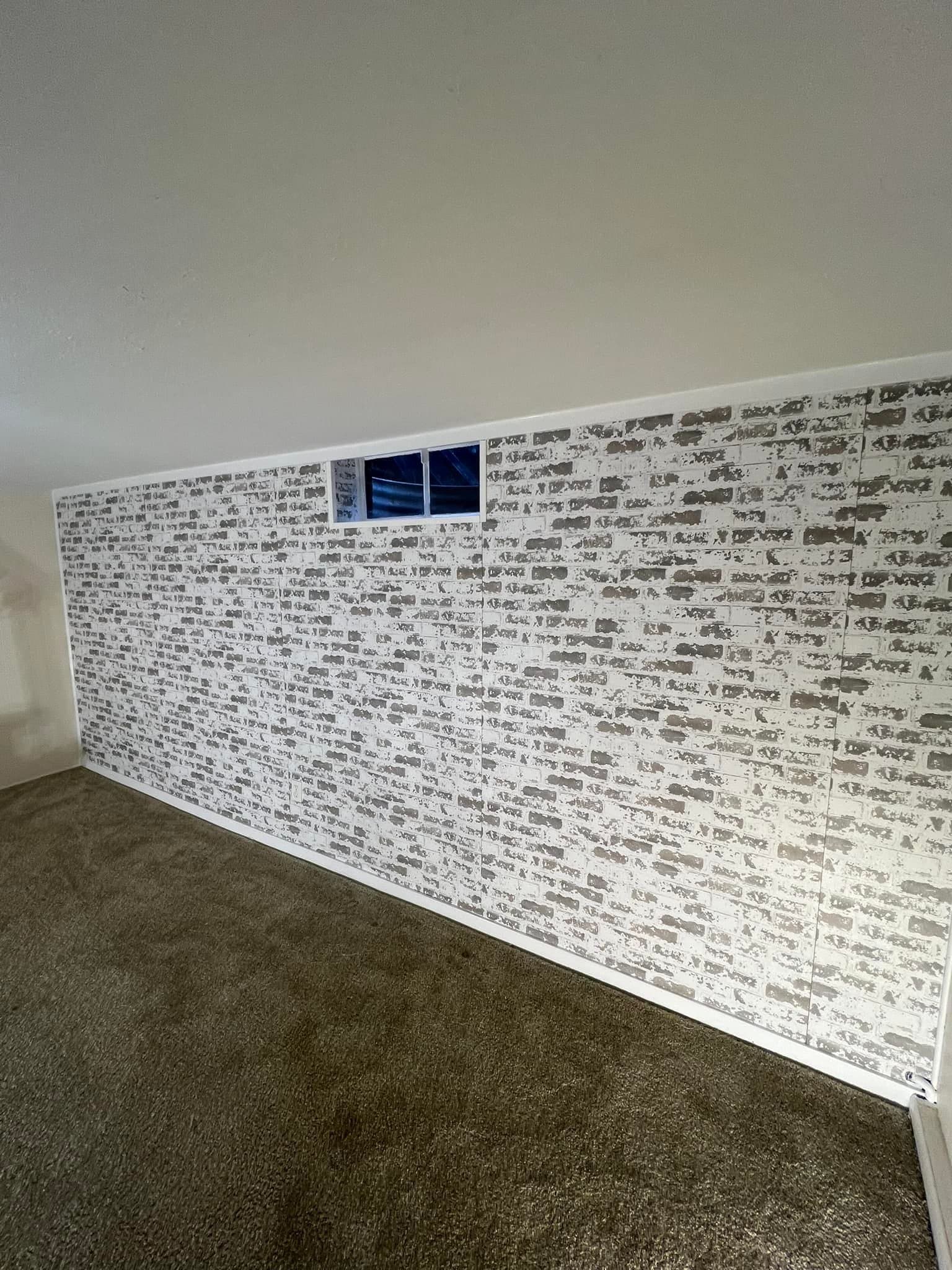
The smell reaches you before you get to the bottom of the stairs, and the floor is dry. No stain, no puddle, nothing to point at — which is why this one is so hard to chase, and why people end up buying a plug-in air freshener and a bucket of masonry paint instead of an answer.
Three different problems make a basement smell like that. Humid air condensing on cold concrete and on everything stacked against it. A drain whose trap has dried out, letting the air inside your waste pipes into the room. Or something organic actually growing, fed by water that has not stopped arriving. One of those is a Saturday afternoon. One is a phone call to a plumber. One has to be opened up before anybody can honestly tell you much.
Start by finding where it is strongest
Two questions do most of the narrowing before you touch anything.
Where is it strongest? Get low and work the room. Smell at the floor along each wall, at the grate of the floor drain, at the lid of the sump pit, at the return-air grille, and in the closet where the boxes live. A haze that is the same everywhere is a different problem from a smell you can walk toward. If you can walk toward it, you have already done the hard part.
What is the season doing? A smell that shows up in late June, worsens through August and fades once the furnace runs is a different animal from one that appears in January. Season is the cheapest evidence you will get.
Cause one: humid air landing on cold concrete
This is the common one, and it is not a leak. Below-grade masonry and a slab sit at ground temperature all summer while the house air is warm and loaded. Air touching that cold face is at a far higher relative humidity than the same air out in the middle of the room. Push it far enough and it reaches dew point — on the wall, on the slab, on the cold water line, and under every box and rug stored against them.
Nothing has to leak for that to happen. The water is already in the air, and the basement is simply the coldest surface it can find.
How you tell, standing there
- Put your palm flat on the foundation wall in August. It should feel noticeably cool, and possibly damp with no source above it.
- Look at a cold water pipe or a toilet tank. Beads on those mean the room air is at dew point on cold metal, and the wall is doing the same thing slower.
- Lift a cardboard box that has been sitting on the slab. The bottom flap is soft, dark, or stuck. Put your nose to it. If that is the smell, you have found it, and it is not the concrete.
- Press a folded paper towel into the carpet with your knee and look at it. Pad holds water long after the face feels dry.
- Clean a surface and watch what happens. This smell comes back everywhere at once, and quickly, because the moisture never left.
The real tell is that it is not local. Condensation is a whole-room condition and the smell reflects that. If yours has one address, skip ahead.
What actually changes it
Dehumidify, do not ventilate. Opening the basement windows on a humid July day is the most common mistake we see down here — you are pulling warm wet outdoor air onto surfaces at ground temperature and asking it to condense. It does. A dehumidifier sized for the space, running to a set point, with a hard drain to the sump or a condensate pump rather than a bucket somebody has to remember, is the actual tool.
Then take away what holds water. Cardboard, paper, old carpet and pad, kraft-faced batts, paper-faced drywall furred against the block — those smell, not the masonry. Boxes go into sealed bins, up off the slab, on shelving with air behind it. Nothing stored tight against a foundation wall.
If the wall is wet rather than merely cool, this stops being housekeeping. A dark band low across every wall, a chalky bloom, paint lifting in dinner-plate patches — that is soil water, and reading the wall properly is where it goes next. More of it than people expect traces back outside, because where the roof water lands decides more basements than any product sold to fix one.
Cause two: a trap that has dried out
Every drain has a trap, and a trap is nothing but a U-bend holding a plug of water. That plug is the only thing between the room and the inside of your waste system. Let it evaporate and the drain becomes an open pipe.
Basements are full of drains nobody uses. The floor drain by the furnace. A laundry standpipe left behind when the laundry moved upstairs. A utility sink. A shower nobody has run in years. An air conditioner condensate line that keeps a floor drain wet all summer and then stops in October — which is why this smell so often turns up in the middle of winter.
An open sump pit does the same job by another route. Even with water in it, an uncovered pit vents whatever sits in the drain tile and the soil into the room.
How you tell
The smell is sour or sewer-like rather than earthy. It is strongest within a step or two of one opening and fades as you back away. Kneel and smell directly at the grate. If it is stronger there than anywhere else in the room, that is your answer.
The other signature is that it comes and goes with the house. Run the dryer, a bath fan and the range hood together and the house goes slightly negative; make-up air comes in through the easiest hole available, and a dry trap is a very easy hole. If the smell arrives shortly after the dryer starts, you are watching air move.
The test, and it costs nothing
Pour a bucket of water down every floor drain, every unused standpipe, the utility sink and any dead shower. Run the taps on fixtures nobody uses. Wait a day and go back down.
If the smell is gone, that was it, and the maintenance version is doing it a few times a year. If a drain dries out faster than you can keep up with, there are trap primers and trap seal inserts made for exactly that. The sump pit gets a gasketed, sealed lid — worth doing anyway, because that lid is part of how soil gas gets handled as well.
When it is a plumber
Say the smell survives filling every trap you can find. An uncapped or broken cleanout, a failed wax ring on a basement toilet, a cracked drain line under the slab, or a venting problem that siphons traps every time an upstairs fixture drains — all real, all common enough, and all a plumber's work rather than ours. We will say so and stop. Anybody offering to fix a sewer smell with framing and drywall is selling you a lid.
Same for a smell that only arrives when the blower kicks on. A wet coil, a drain pan going nowhere, or something in the duct is an HVAC contractor's call.
Cause three: something is growing on something organic
Mold does not eat concrete. It eats what we put in front of concrete: paper facing on drywall, the settled dust inside a batt, carpet pad, the back of a sheet of paneling, the cardboard in the corner. Give it a moisture source that never quits and it works whether or not anyone can see it.
How you tell
- The smell has a direction. One wall, one corner, one built-in, one soffit. You get warmer and colder walking around the room.
- It does not track the season the way condensation does. It is there in February.
- It comes back fast. Clean the surface and it returns to the same spot within days, because you took the color off and left the food and the water.
- It is worst where something has sat still — behind the shelving, under the pad, inside the boxed-in chase nobody has opened.
Lift the carpet at the edge of the suspect corner and smell the pad rather than the face. Pull a baseboard and look at the bottom edge of the drywall. Look at the back of anything cardboard against that wall. If the material is colonized it is coming out either way, and a lab result would not change that.
The honest answer is often that it has to be opened up
If the smell has one address and nothing is visible at that address, it is behind something — a finished wall, a subfloor, a soffit, the underside of a pad. No meter reads through drywall and tells you what is living behind it, and anyone who says otherwise is guessing at your expense. Somebody has to cut an inspection hole and look.
At that point it stops being a smell and becomes a sequence: find the water, correct it, remove what cannot be cleaned, dry the assembly to a reading rather than to a feeling. What has to happen before a wall gets framed again is its own subject, and the order in it is not negotiable.
The health question is not ours to answer
We do not test for mold, we do not diagnose it, and we do not remediate or abate. If somebody in the house has asthma, an immune condition, or a doctor asking about the basement, that conversation belongs with the doctor and the Indiana Department of Health, not with a contractor.
If you want air or a surface tested, hire an independent testing firm, and hire it separately from whoever would do the removal. A company that tests, finds a problem and then quotes the cleanup is grading its own homework.
Radon has no smell, and neither does carbon monoxide
Worth saying plainly, because people reach for it. A musty basement tells you nothing about radon. Radon is odorless and the only way to know is a test. Hamilton County carries an EPA radon zone of 1, the highest of three, meaning the predicted average indoor screening level is greater than 4 pCi/L. The EPA action level is 4 pCi/L or higher, and it suggests considering a fix between 2 and 4 pCi/L. The Indiana State radon office is 1-800-272-9723.
Carbon monoxide is the same — no smell, and a working alarm on every level is the answer rather than your nose. A sharp or acrid smell near the furnace or water heater is the gas utility, that day.
What is a Saturday and what is not
Yours, this weekend: pouring water down every trap, sealing the sump lid, getting boxes off the slab and into bins, pulling carpet and pad that has been down since before you owned the house, and putting in a dehumidifier with a drain that does not depend on anyone's memory. That list settles a real share of the basements we get called about.
Not yours: a sewer smell that outlives full traps, a wall that is wet rather than cool, growth past a bay or two, anything that reached the ductwork, a horizontal crack with a bow above it, or a smell coming from inside a finished assembly. Those belong to a plumber, a drainage correction, a remediation firm, an engineer, and a controlled opening-up.
The short version
Find where it is strongest and note the month. Damp paper, everywhere at once, worst in August — dew point, fixed with a dehumidifier and a purge of the cardboard, not with a sealer painted on the wall. Sour, strongest at one grate, worse when the dryer runs — pour water down the traps and wait a day. One address, back within days of cleaning, present all year — something is growing, and finding it means opening something up.
What none of it justifies is finishing over the top. Drywall does not seal a smell in. It moves it somewhere you can no longer check, and it takes with it the flooring decision the slab was always going to control. Every basement finishing job we take starts with the wall and the water, before a stud goes up. Dry is not a preference down there. It is the condition everything else sits on.
If yours smells and you cannot find the address, ask us to come and look. We will tell you what we find, including when it belongs to another trade.