Most people stay. Almost nobody plans for it properly, and the plans that come apart all come apart the same way — they were built around noise and mess, which are irritating, instead of around water, power and the bathroom count, which decide whether a household keeps functioning.
A remodel is not one continuous condition. It is a sequence of stages, and each stage takes something different away from you. Demolition is loud and filthy. Rough-in is quiet and takes your water. Drywall is the dustiest thing that will happen in your house. Tile is a saw running outside and a floor you are not allowed to walk on. Nobody can tell you how the whole job will feel, because it does not feel like one thing.
What you can do, before anyone arrives, is ask which stage takes what. Then arrange the household around the days that are genuinely hard.
What actually goes off, and when
Water
The plumbing work in a bathroom is not one shut-off. Setting a new shower valve means opening the branch and making joints, and in a lot of the housing stock around Fishers and Noblesville there are no isolation valves at the branch — so the main goes off for the house, not for the room. That is normal. It is only a problem when it is a surprise on a Tuesday morning.
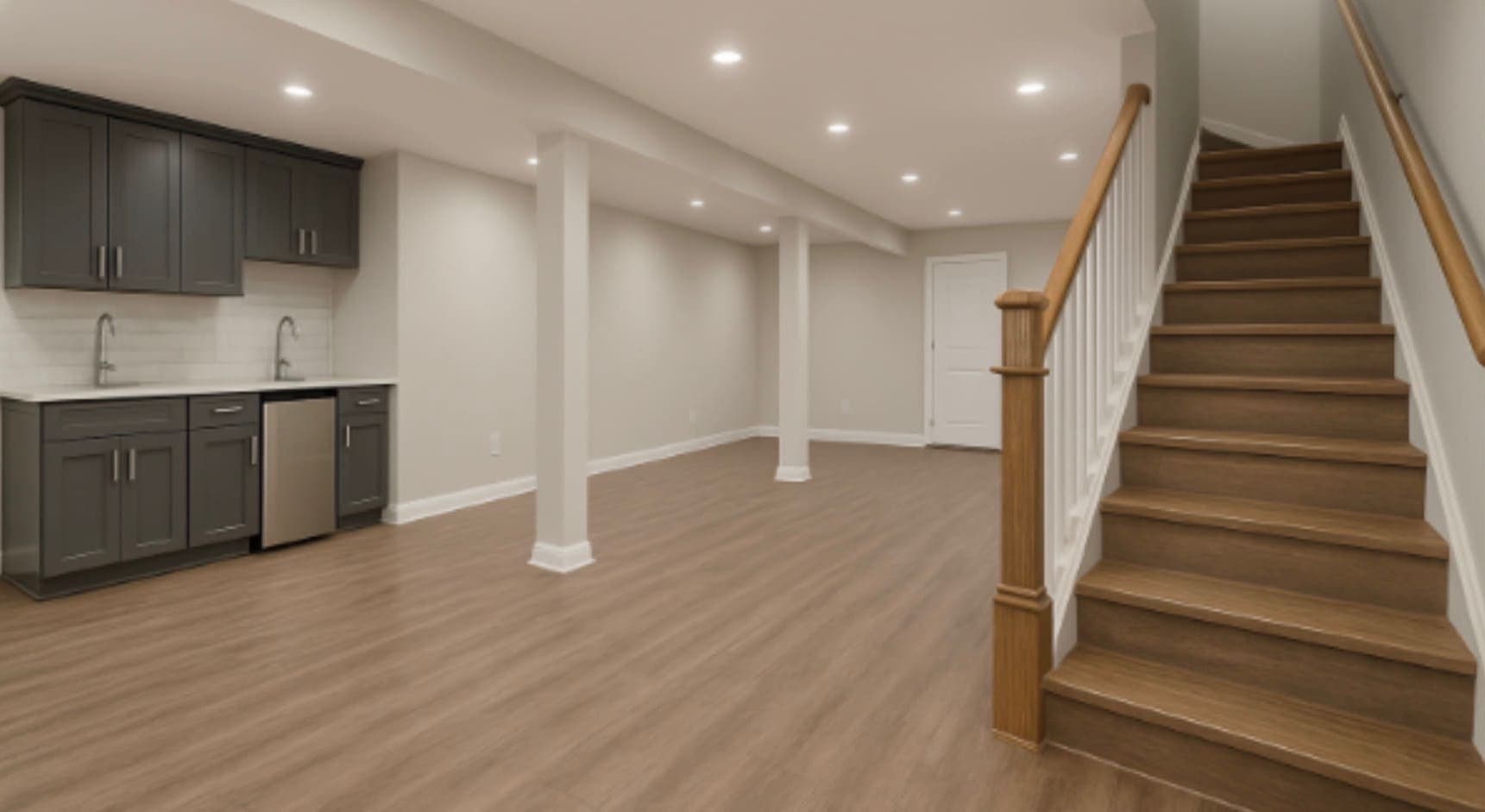
Ask which days involve the main being off, and whether the water heater is touched on any of them. Fill a jug the night before. If your work is a basement bathroom, the shut-off is the least of it — opening a slab for a drain line is a concrete saw and a hammer drill in the loudest room in the house, and the rough-in decides the whole job before a wall is framed.
Power
Circuits die when a wall opens, and the things people forget are on those circuits are never the things in the room being worked on. The chest freezer in the garage. The router. The security panel. The garage door opener. The sump pump.
The sump pump is the one that matters here. A wet spring week with the pump on a dead circuit is a worse outcome than an unfinished bathroom, and it is how a basement ends up with a water problem. Ask which circuits go down, and ask for the pump and the freezer to be moved onto something live before anyone starts.
Heat, air, and the return nobody thinks about
Your HVAC system is the fastest way to move dust into rooms nobody is working in. A return anywhere near the work pulls fine dust off the floor, into the ducts, and back out through every register in the house. Sealing the returns in the work zone before demolition is not fussiness — it is the difference between cleaning one room and cleaning every room you own.
If ducts themselves are being moved — routine when we finish a basement, because trunk lines and beams set what the ceiling can be — the system is down while that happens. Worth knowing which week that is, and what the weather will be doing. It is one reason the season you start in is a real decision and not just a preference.
The one-bathroom problem
This is the honest one.
If the house has one full bath and that is the bath being remodelled, you are not living through it in any comfortable sense. A toilet can be dealt with. A shower cannot be reassembled each evening and taken apart again each morning, and tile, thinset and grout all need to be left alone while they cure. You cannot use a shower early because the calendar would like you to.
Where there are two bathrooms, sequence is worth more than anything else you can negotiate. Finish the secondary bath first, move into it, then open the primary. The two rooms deserve different budgets for different reasons, and doing them in that order buys you a functioning house for the harder half of the work.
Where there is only one, the realistic options are unglamorous:
- Shower somewhere else — family, a gym, a neighbor who owes you.
- Stay elsewhere for the wet stretch, not for the whole job. The room is out of service from demolition until the finishes are set; it is not out of service the whole time a crew is in the house.
- Change the scope so the room comes back sooner, which usually means leaving fixtures where they are.
What does not work is assuming a crew can hand you a usable shower each evening. Ask which day the shower goes out of service, what has to happen before it comes back, and whether the toilet stays on the floor meanwhile. Ask before demolition. After demolition it is not a question, it is a complaint.
Dust travels on air and on feet
Two paths, and plastic sheeting stapled across a doorway addresses neither. It billows, it comes loose at the bottom, and everybody walks through it all day.
What works is duller and more specific:
- A zippered dust door in a sealed opening, so the barrier survives being used.
- An air scrubber or negative-air machine with HEPA filtration, holding the work area at lower pressure than the rest of the house — air moves in, not out.
- Returns and registers in the zone taped off before the first swing.
- Floor protection along the entire path from the work to the exterior door, not just inside the room. Hard board where wheels and boots run, not paper.
Two events produce most of the dust. Sanding drywall compound is one, and that dust is fine enough to find every horizontal surface in the house. Cutting tile, block or concrete is the other, and that one produces respirable silica — which is why the saw belongs outside, wet or on extraction. A contractor who tells you where the saw lives before being asked has thought about it.
Ask where the debris goes as well. A dumpster or a trailer on the drive is normal, and around here it is also an HOA question, with a rule attached about placement and how long it can sit.
The hours, the key, and who is actually in your house
You are not hosting one crew. Framers, a plumber, an electrician, a drywall crew, a tile setter, a painter — different faces, arriving at trade hours, which start earlier than office hours. Ask what time the day starts, whether there is a lockbox or a code, whether anyone needs access when you are out, and what happens on days you would rather nobody came at all.
Say the awkward things at the start. The dog cannot be near the back door. The downstairs bedroom is a home office with calls in the morning. The kids are home all summer. None of that is unreasonable, and all of it is easier to build into a schedule than to fix mid-week. That conversation belongs in the walkthrough, which is when we are already tracing the route from the front door to the room.
Take the art off the walls that back onto the work. Vibration travels through framing, and a picture hook is not a fastening.
Cooking without a kitchen
The sink is the loss, not the range. A microwave, a kettle, an induction burner and a folding table will feed a family. Nothing solves dishes except a bathtub, a laundry sink or a hose, so put the temporary kitchen near a drain if the house gives you one, and stock up on the disposable version of everything else.
One sequencing fact about kitchens: stone is templated off installed cabinets, not off a drawing. So there is a window where the base cabinets are in, the room looks nearly finished, and there is still no counter and no connected sink. That is not a delay, it is how a countertop gets made to fit. Plan the temporary kitchen to cover that window, not just the demolition. If the sink or the range is moving to a new wall, more moves with it and the window is wider. Keeping the layout is the version of a kitchen remodel you can most easily live through.
Work out where the refrigerator goes, and confirm it lands on a circuit that stays live. It usually ends up in a dining room — fine, until somebody kills the wrong breaker.
Sequencing is the lever you actually control
Nothing should come out of your house until what replaces it is in the country, on a truck, or in a garage. The single most reliable way to turn a remodel into camping is to demolish before the material has arrived. Cabinets, tile, the vanity, the shower glass, the stone, the fixtures — the long-lead items should set the start date, not the other way round.
Permits belong in the same category. In Fishers, the city says residential applications are typically processed in no more than 15 working days when the submittal is complete, and applications go through its online portal. That is calendar you can spend with the house intact, provided the application goes in first. Confirm the requirement for your project with the local building department, and note that Carmel, Noblesville and Westfield each run their own — the permit question in Fishers does not generalize across the county.
What turns up behind the wall is the other variable. The fix is not a longer schedule, it is an earlier look — we open, we look, then we quote. Knowing what causes a change order is how you tell the disruptions that were avoidable from the ones that were always coming.
What to ask before the crew arrives
Ask these at the walkthrough, when the answers cost nothing:
- Which days does the water go off, and does the main go off or just a branch?
- Which circuits go down, and what is on them besides the work area?
- Where is the dust barrier, and is there negative air or just plastic?
- Where does the cutting happen, and where does the debris go?
- What time does the day start, and who has access when we are out?
- When does the shower go out of service, and what has to happen before it comes back?
- What is on order, and what has arrived, before anything gets demolished?
A contractor who has answers to those has run the job in their head already. One who has not will improvise it in your hallway.
The short version
Decide by the bathroom count and the shut-offs, not by how much dust you think you can stand. Sequence the secondary bath before the primary if you have one. Do not let anything be demolished before its replacement is on site. Get the permit moving before the house is open. Move the sump pump and the freezer onto a live circuit.
Everything else is inconvenience, and inconvenience passes. The parts that go wrong when a family is living in the middle of the work are almost always the parts nobody agreed on in advance — which is the same argument we make about what goes behind a shower wall and about the order a bathroom gets built in. The plan is the product.
If you want somebody to walk your house and say honestly which stages you can live through, ask for an estimate and we will go room by room.